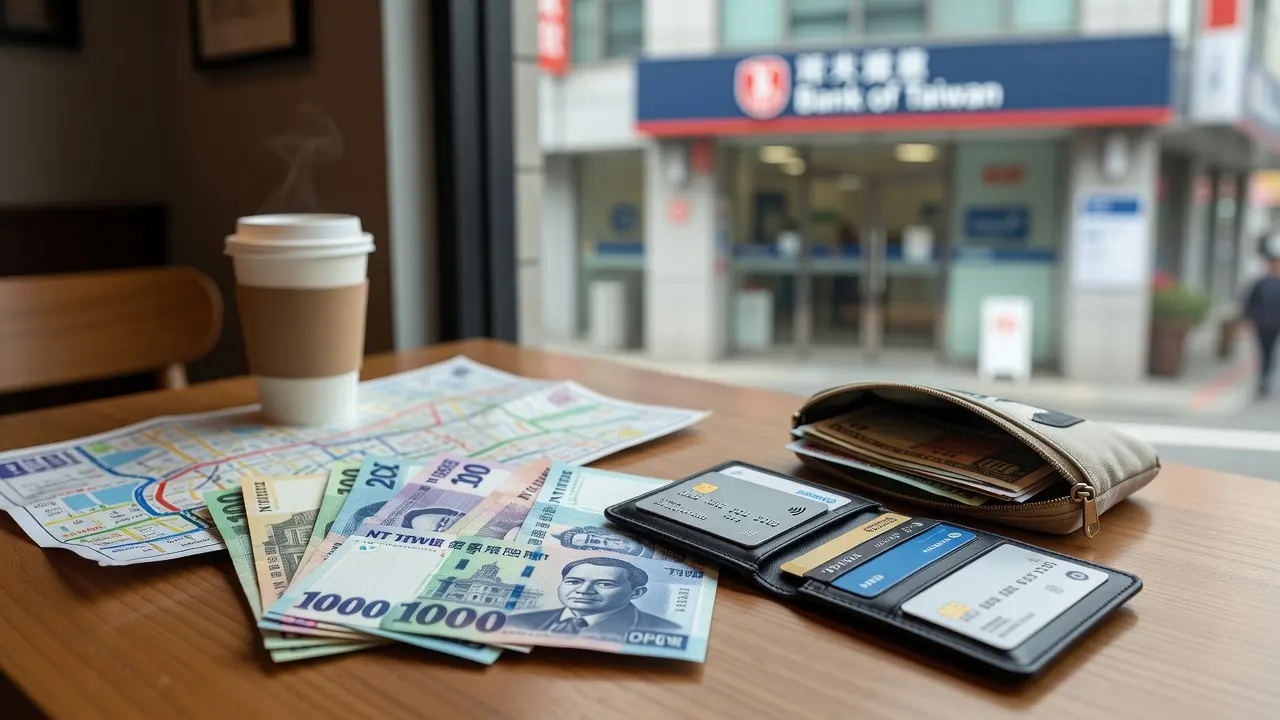
Pay in local currency or your own?
Pay in local currency. When you choose the local currency, Visa or Mastercard converts the amount at its daily rate, and your bank adds its foreign transaction fee if it has one. When you choose your home currency, the shop's DCC provider converts at its own rate, which is usually worse even after your bank's fee is counted.
The rule holds for almost every card and country. The only case where DCC might cost about the same is a card with a high foreign fee that your bank waives when the charge is already in your home currency, and even then the DCC rate usually wipes out the saving. Checking takes seconds: compare the DCC rate on the screen with today's rate on a converter.
How dynamic currency conversion works
Dynamic currency conversion is a service run by payment processors for merchants and ATM operators. The terminal reads your card, recognises it as foreign, and offers to convert the bill into your card's currency at a rate the provider sets. If you accept, the charge goes to your bank already converted; the provider keeps the margin and shares part of it with the merchant.
- You insert or tap your card abroad.
- The terminal shows two amounts: the local price and a converted price.
- You or the cashier choose one option.
- If you choose your home currency, the DCC provider's rate applies and cannot be changed later.
Cashiers sometimes choose for you or hand over the machine already set to your home currency. Look at the screen before you enter your PIN.
How much extra DCC costs
DCC typically adds 3% to 8% to a purchase compared with paying in local currency, and some ATMs and tourist-area terminals charge more. On a hotel bill of €500, that can be €15 to €40. The cost is built into the rate, so the receipt may show "no commission".
A worked example with assumed rates: you pay a €200 restaurant bill with a US card. The card network rate is 1.16 dollars per euro and your bank charges 1%.
- Pay in euros: €200 × 1.16 = US$232, plus 1% = about US$234.30.
- Accept DCC at 1.23 dollars per euro: €200 × 1.23 = US$246, and the bank may still add its fee.
- Extra cost of DCC: about US$11.70, or 5%.
Over a week of hotels, meals and shopping, the same 5% on €1,500 is about US$87. ATMs offering DCC show a similar choice; how to avoid other cash costs is covered in our guide on whether to exchange money at airport counters.
How to spot and refuse DCC at shops and ATMs
To refuse DCC, choose the local currency on the screen, or tell the cashier "local currency, please" before they process the payment. At ATMs, pick "decline conversion" or "without conversion". If the receipt shows your home currency and a "rate" or "markup" line, DCC was applied.
- Words that mean DCC: "Charge me in USD/VND", "Accept conversion", "Guaranteed rate", "Pay in your currency".
- Words that mean local currency: "Decline conversion", "Without conversion", "Pay in EUR/THB/TWD".
- Online shops abroad: the same choice appears at checkout; pick the shop's currency.
- Hotels and car rentals: ask at check-in that the final bill be charged in local currency, since the choice is often made at checkout when you are not watching.
Travellers in Taiwan and other cash-heavy places meet DCC mainly at ATMs; see our guide to taiwan travel money. A wider comparison of cash and card options is in Best Way to Exchange Currency Before and During Travel, and the currency converter shows the mid-market rate to compare with any DCC offer.