
Taiwan travel money: the short answer
Carry NT$1,000 to NT$2,000 in cash per person per day, plus a card for hotels and larger bills. On 25 November 2026, NT$1,000 is about 30.34 US dollars and NT$2,000 about 60.69 dollars. Load NT$500 to NT$1,000 onto an EasyCard for a few days of transport.
- Light cash user (cards in malls and hotels, cash for snacks): about NT$7,000 a week, or 212.4 US dollars.
- Typical visitor (night markets most evenings, small restaurants): about NT$10,000 a week, or 303.43 US dollars.
- Heavy cash user (street food every meal, rural areas, small guesthouses): about NT$14,000 a week, or 424.8 US dollars.
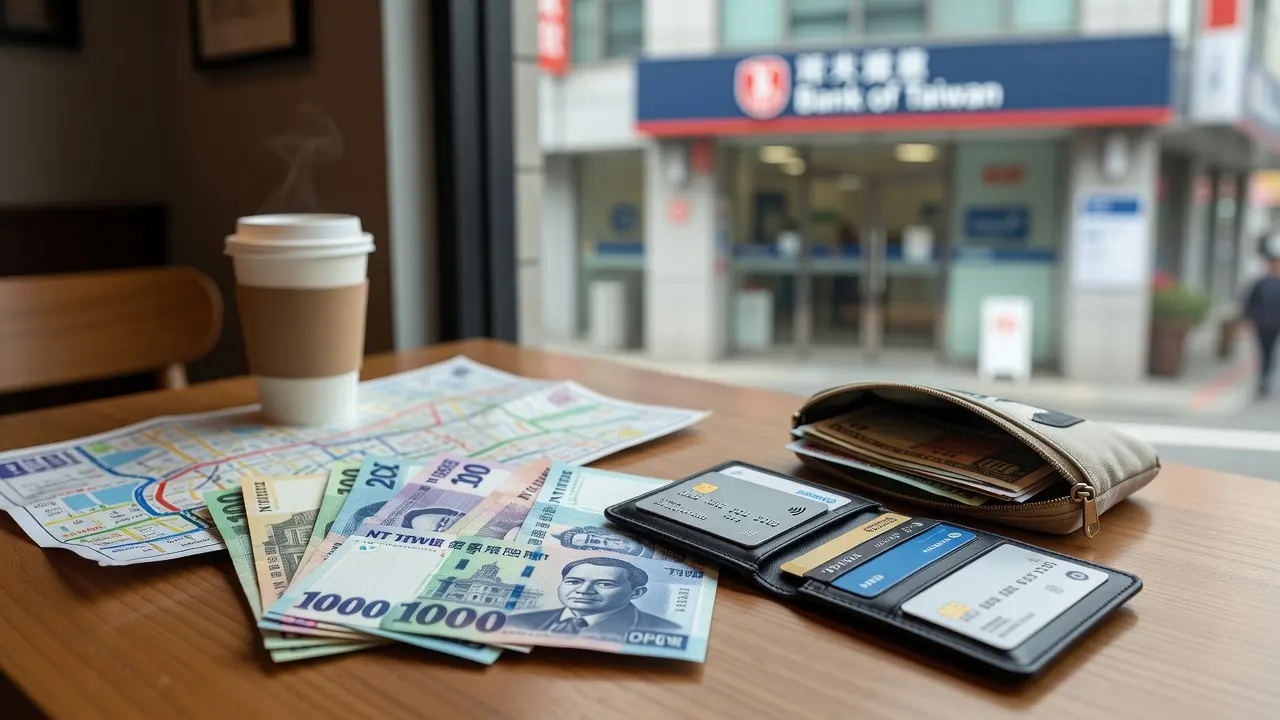
These are example amounts for planning, not official figures. Notes come in NT$100, 200, 500, 1,000 and 2,000; the 200 and 2,000 notes are rarely seen, so expect change in 100s and 500s. The notes and coins are covered in our guide to ntd currency.
Cash, cards or e-wallets in Taiwan
Taiwan is more cash-based than Singapore or Korea. Cards work in hotels, department stores, chain restaurants and for high-speed rail and Taiwan Railway tickets bought at stations or online. Night markets, breakfast shops, noodle stalls and traditional markets usually want cash. Local mobile payments such as LINE Pay and JKO Pay are common but often need a Taiwanese account.
- EasyCard: costs NT$100 for the card, then top up with cash at MRT stations or convenience stores. It works on Taipei and Kaohsiung metros, buses, YouBike and at 7-Eleven and FamilyMart.
- Card acceptance: Visa and Mastercard are widely taken where cards work; American Express less so.
- Tipping: not expected; many restaurants add a 10% service charge.
Leftover EasyCard balance can be spent at convenience stores before you fly, so you leave with less unused cash.
Where to exchange TWD: before you go or on arrival
For a TWD exchange, Taiwan itself usually offers better value than home, because the New Taiwan dollar is not widely sold abroad and spreads outside Taiwan are wide. Bank of Taiwan and other banks run counters in the arrivals halls at Taoyuan airport, and city bank branches exchange US dollars, euros, yen and other major currencies with a passport.
Bringing US dollars and converting in Taiwan is a common approach for travellers from Vietnam, where few banks sell TWD cash. Compare offers with the mid-market rate for usd to ntd, or twd to vnd for readers in Vietnam. Airport exchange in Taiwan differs from many countries: bank counters at Taoyuan generally use the same board rates as their city branches. The trade-offs elsewhere are covered in our guide on whether to exchange money at airport counters, and all methods in our guide to money exchange.
A worked example with assumed rates: at a mid-market rate of 31 TWD per US dollar, exchanging US$500 at a Taiwanese bank counter buying dollars at 30.7 gives NT$15,350. Buying TWD at home at an assumed 29.5 gives NT$14,750, about NT$600 less.
ATM fees and dynamic currency conversion in Taiwan
ATMs are common in Taiwan, including in convenience stores, and many accept foreign Visa, Mastercard, Plus and Cirrus cards. Look for machines showing your card's network logo. The local bank may charge a fee, and your own bank adds its foreign withdrawal and conversion fees.
- When an ATM or card machine offers to charge you in your home currency, decline and choose TWD.
- Withdraw for several days at once to spread fixed fees.
- Post office ATMs (Chunghwa Post) are widespread and accept many foreign cards.
- Turn on overseas use and check limits in your bank app before you fly.
Customs cash limits for Taiwan
Travellers entering or leaving Taiwan must declare New Taiwan dollars above NT$100,000, or foreign currency above US$10,000 or the equivalent. Leaving Vietnam, travellers with more than US$5,000 or more than 15 million dong in cash must declare to Vietnamese customs. The full list of thresholds is in Customs Cash Limits: How Much Money Can You Carry Abroad?
Workers in Taiwan who send wages home should use licensed channels, explained in our guide to twd remittance. Any amount can be checked on the currency converter.






